

Policies, Frameworks & Blueprints
At Voice For Change Foundation, our initiatives go beyond advocacy — they provide actionable blueprints for how AI can be developed and governed responsibly, ensuring that technology strengthens workers, communities, and the future of our society.
-
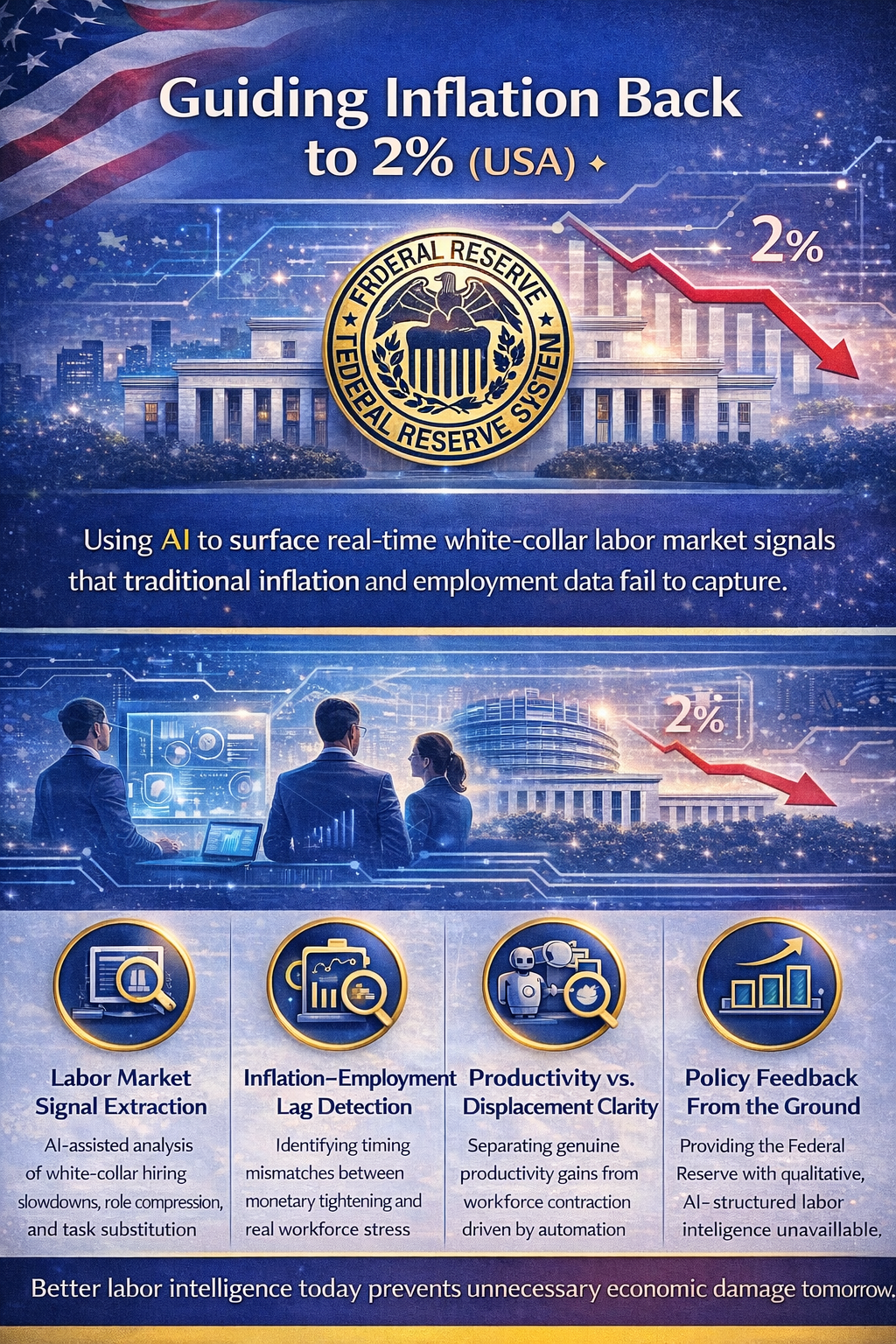
AI-informed pathways to support the Federal Reserve’s 2% inflation goal by balancing monetary tightening with real-time labor-market signals on employment stability and growth.
This analysis synthesizes publicly available labor-market data, longitudinal job-market signals, and anonymized qualitative observations using AI-assisted pattern recognition, with all interpretations subject to human review and intended to complement—not replace—official economic statistics.

-
Purpose
The Economic & AI North Star defines why the United States is adopting AI—and what success looks like beyond GDP. It anchors all downstream policies to a single principle:
AI must expand economic opportunity, preserve human dignity, and strengthen national resilience—not merely increase corporate efficiency.
Core Objectives
Maintain U.S. leadership in AI innovation
Protect and evolve the American workforce (white- and blue-collar)
Restore trust in institutions, hiring systems, and markets
Use AI productivity gains to stabilize long-term public finances
Non-Negotiables
Humans remain accountable for consequential decisions
Economic gains from AI must be broadly shared
No innovation without safeguards in high-impact domains
This North Star governs every framework below.

-
What This Framework Does
This framework defines how AI is adopted responsibly across the U.S. economy—by businesses, governments, and institutions—before regulation even kicks in.
Core Pillars
1. Human-in-the-Loop by Design
AI may assist, recommend, or optimize—but humans retain decision authority in:
Hiring and termination
Credit, housing, insurance
Healthcare decisions
Public benefits and law enforcement
2. Explainability as a Trust Requirement
If an AI system affects a person’s livelihood, health, or rights:
The outcome must be explainable in plain language
Reason codes must be accessible
Appeals must route to a human
3. Proportional Safeguards
Low-risk AI: disclosure + privacy hygiene
Medium-risk AI: transparency reports + periodic review
High-risk AI: audits, monitoring, human oversight
4. Incentivized Responsibility
Compliance is rewarded through:
Procurement preference
Tax credits and grants
Public certification labels
This framework prepares the ground for regulation—so adoption doesn’t stall or backfire.
-
The National Rulebook
Purpose
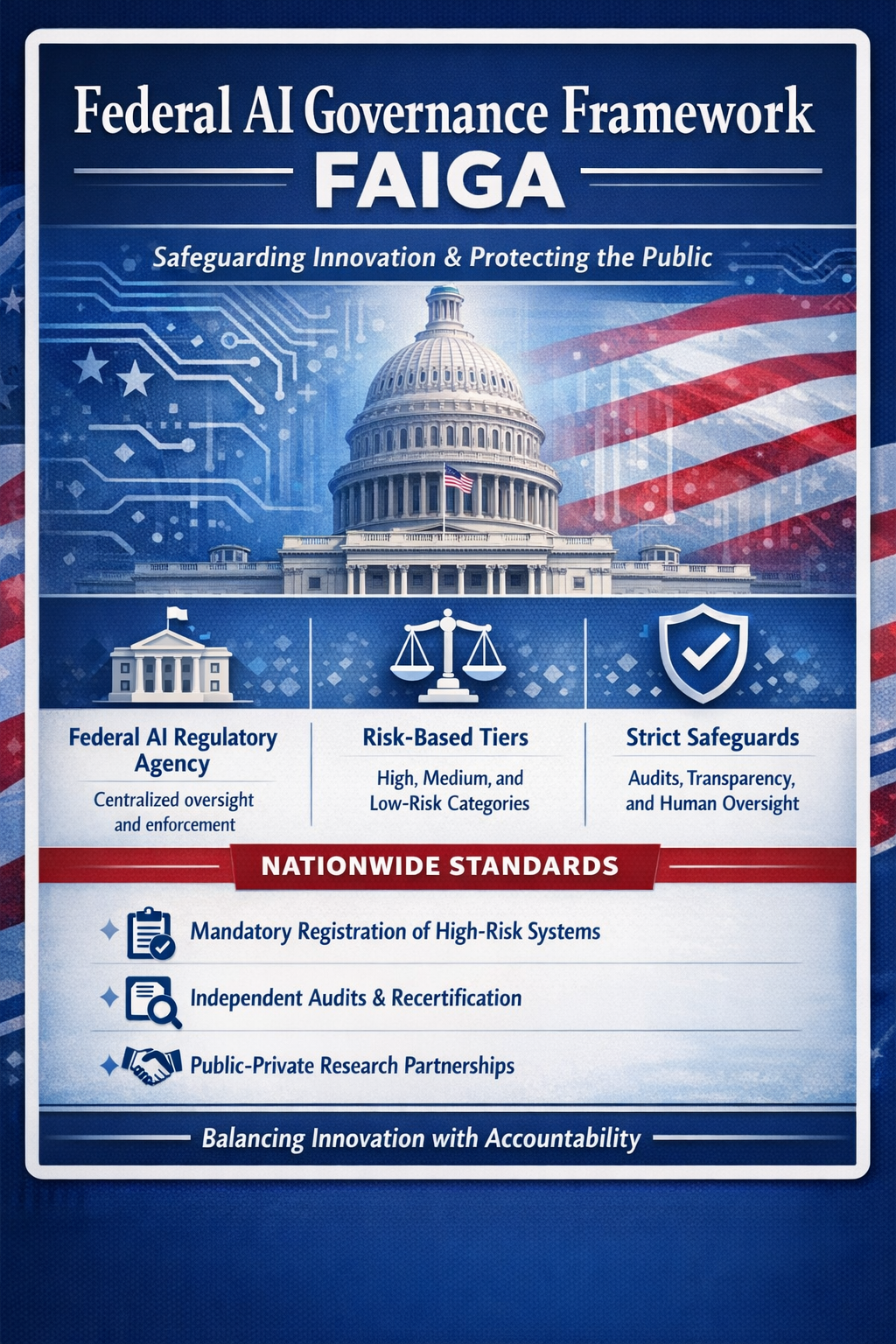
FAIGA is the binding federal backbone that prevents regulatory chaos while protecting innovation.
Institutional Design
Federal AI Regulatory Agency (FARA)
Independent or meaningfully insulated (FTC / Commerce-aligned)
Coordinates with EEOC, CFPB, DOJ, HHS, DOT, DHS, DoD
Harmonizes with NIST technical standards
Risk-Based Regulatory Model
Risk Tier High
Examples Hiring, healthcare, credit, law enforcement, autonomous systems
Obligations
Pre-deployment impact assessments, audits, explainability, human oversight
Risk Tier Medium
Examples HR screening, logistics, large-scale advertising
Obligations Transparency reports, bias testing
Risk Tier Low
Examples Chatbots, recommenders
Obligations Disclosure + privacy safeguards
-
(National + State-Adaptable Layer)
Purpose
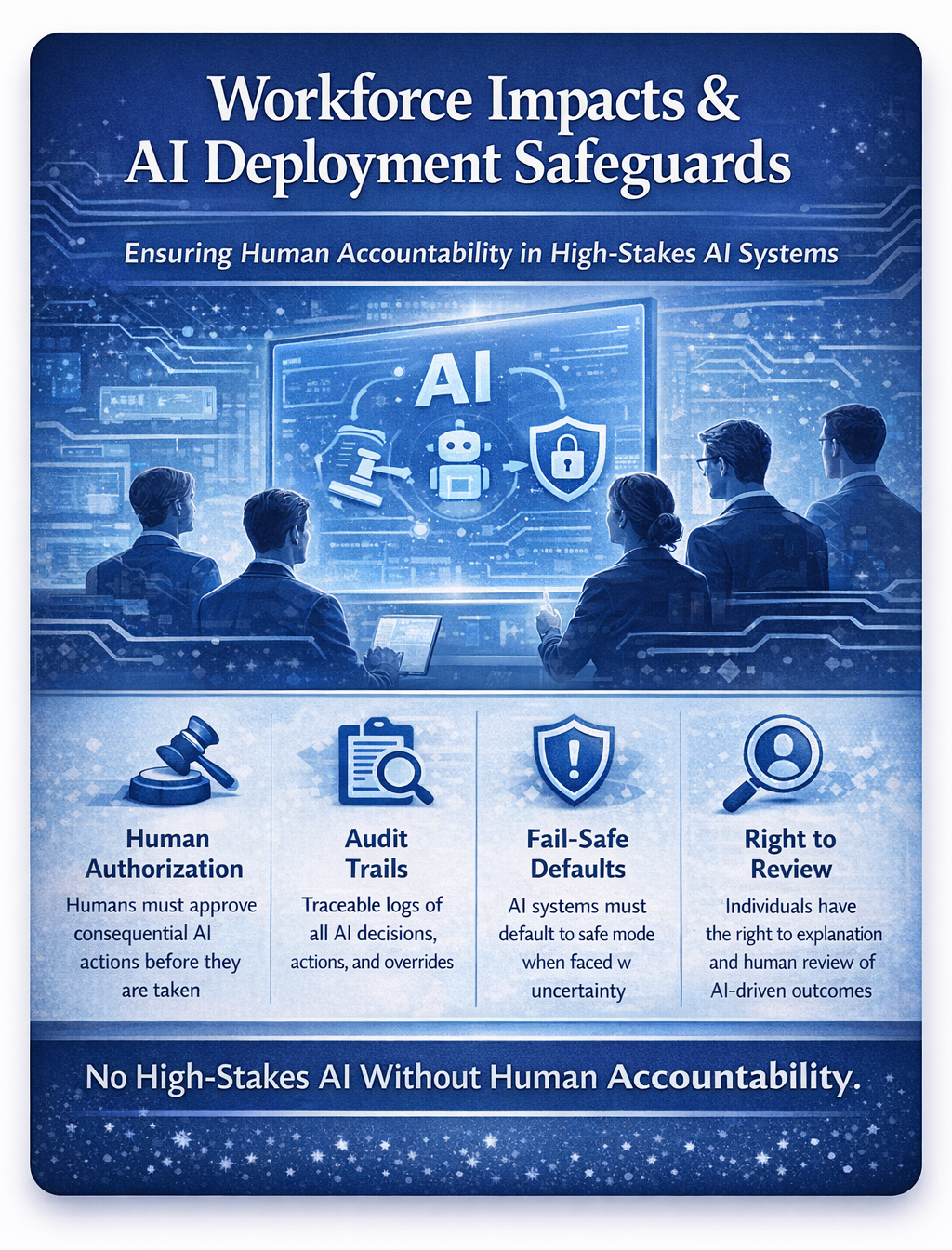
This framework closes the biggest gap in U.S. AI policy: deployment accountability, not research control.
Core Principle
If AI is allowed to act in the real world, humans must remain responsible.
Deployment Requirements (High-Stakes Systems)
Human authorization before consequential actions
Audit logs and traceability
Fail-safe defaults
Incident response obligations
Right to explanation and review
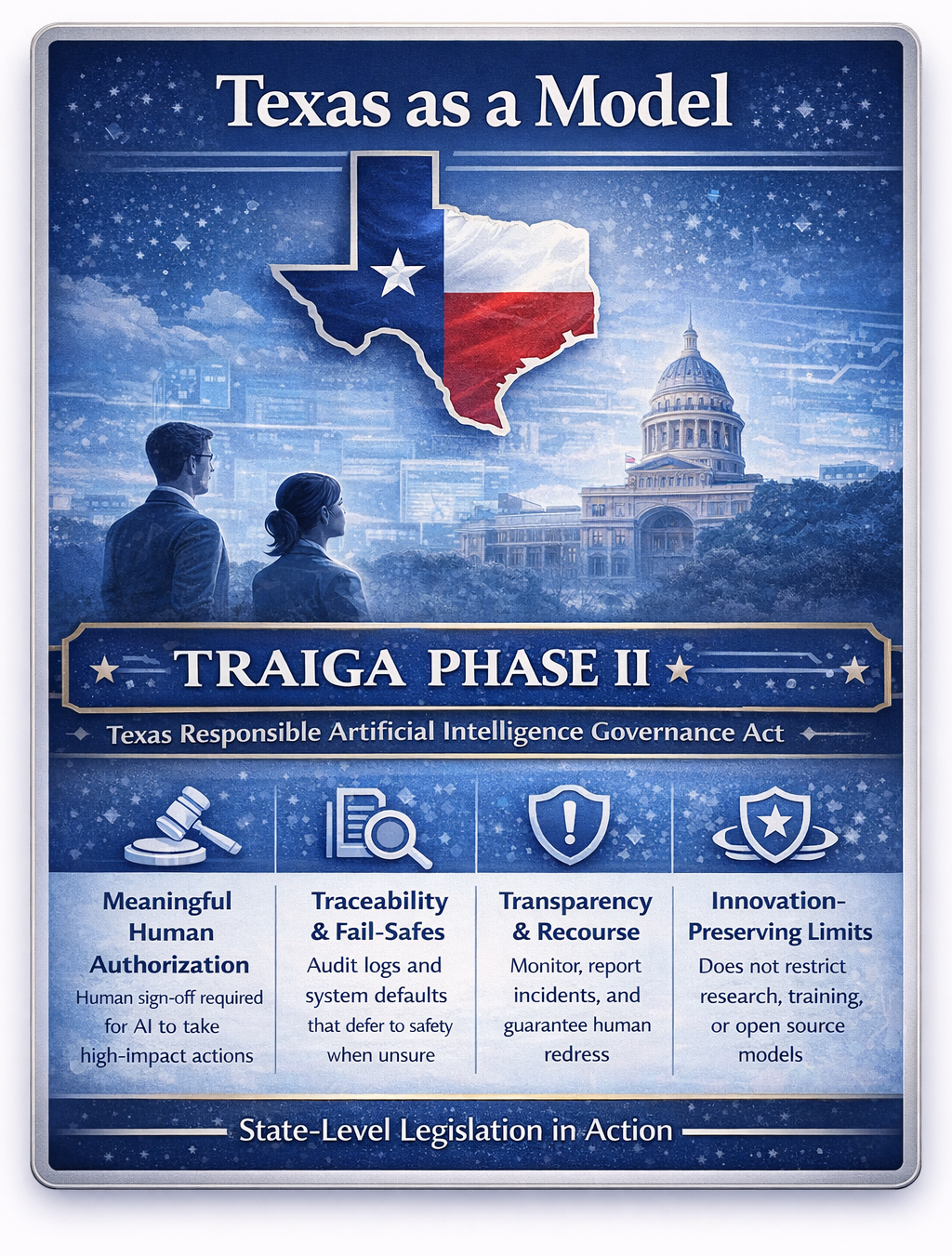
Texas as a Model (TRAIGA Phase II)
Texas demonstrates how states can:
Regulate deployment without chilling innovation
Exclude research, training, and open-source development
Focus on agentic systems that trigger real-world outcomes
FAIGA sets the federal floor.
TRAIGA-style laws become state-level accelerators.
-
A concise Texas-first legislative proposal for responsible AI deployment.
-
Stabilizing the Labor Market
Why This Is Critical
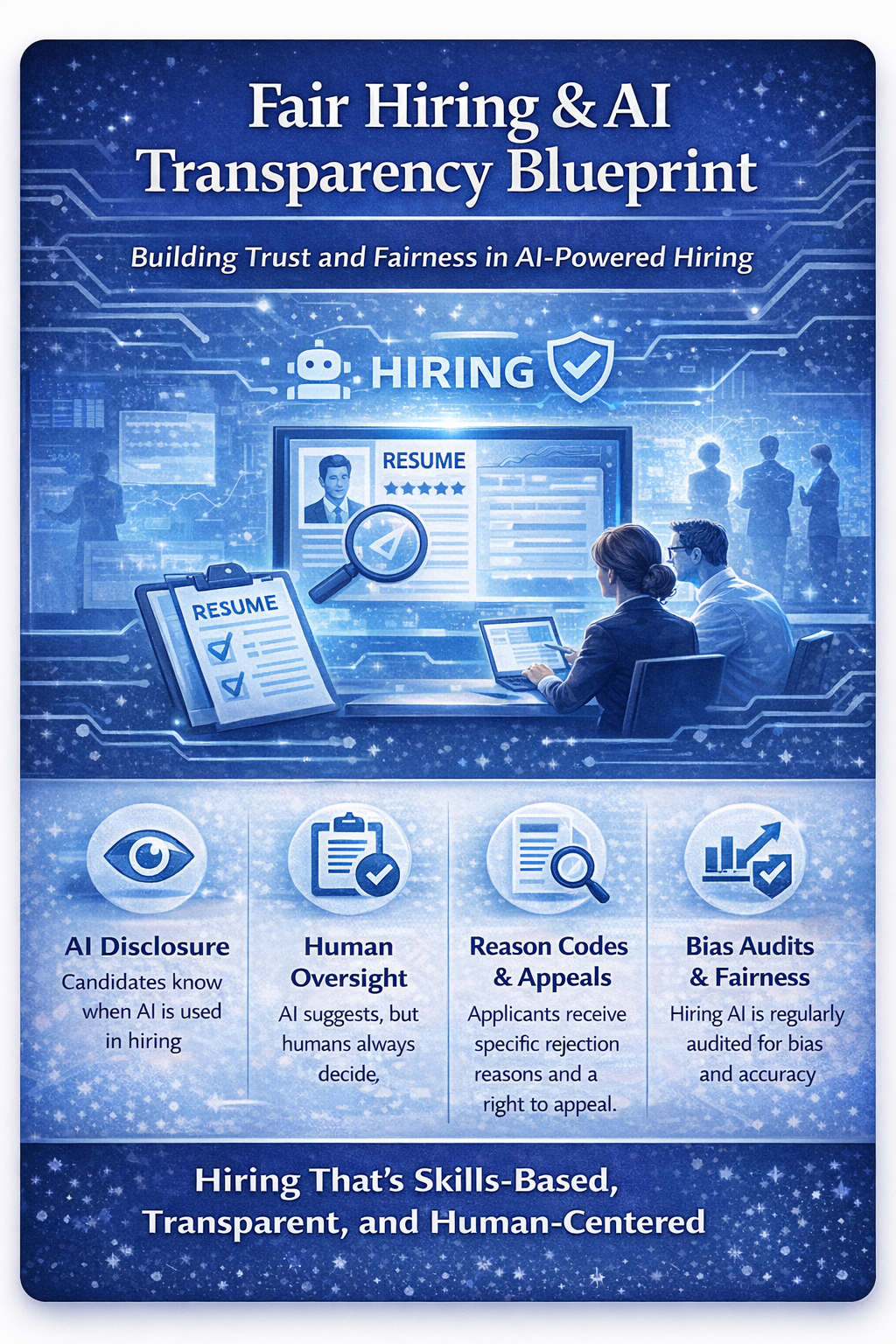
AI-driven hiring is now a systemic labor-market risk, not a tooling choice.
Core Guarantees
For Workers
Right to know when AI is used
Right to a reasoned explanation
Right to human review
For Employers
Skills-based hiring standards
Minimum human-review floors
Bias audits and retention of logs
For the Economy
Reduced false negatives
Faster re-entry for displaced professionals
Restored trust in hiring systems
National Policy Hooks
EEOC-aligned enforcement
NIST HR-AI standards
Procurement preference for compliant employers
This blueprint directly stabilizes white-collar re-entry and reduces long-term unemployment.
-
Corporate Obligation Layer
Purpose
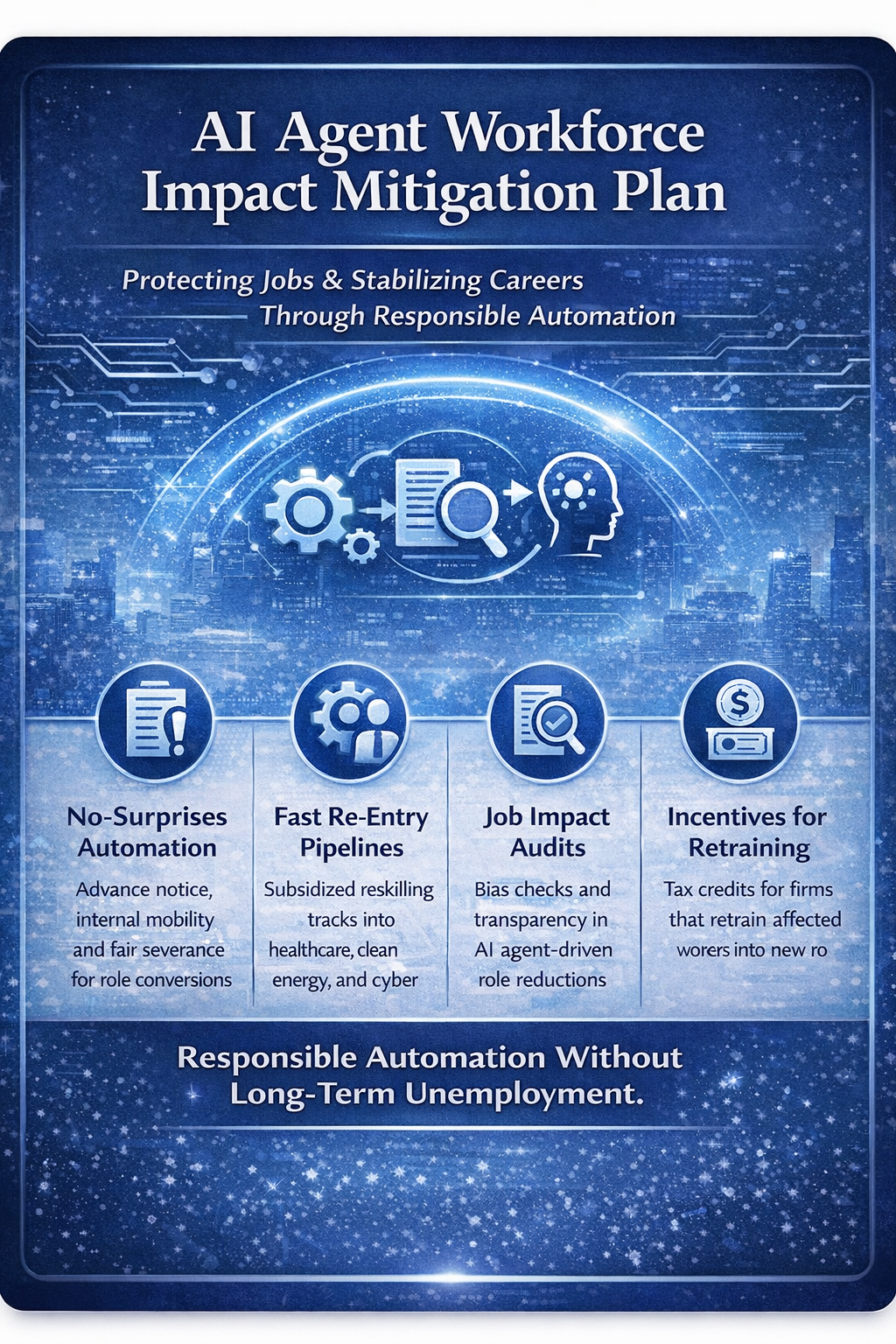
This plan governs what companies must do when deploying AI agents that replace or radically restructure roles.
Key Requirements
No-Surprises Automation
Advance notice of role conversions
Internal mobility first
Redeploy-or-separate packages
Fast Re-Entry Pipelines
Healthcare
Clean energy
Cybersecurity
Advanced manufacturing
Incentive Alignment
Tax credits for retraining
Higher payroll taxes for mass displacement without mitigation
This is how automation becomes responsible instead of extractive.
-
Government & Worker Support Layer
Purpose
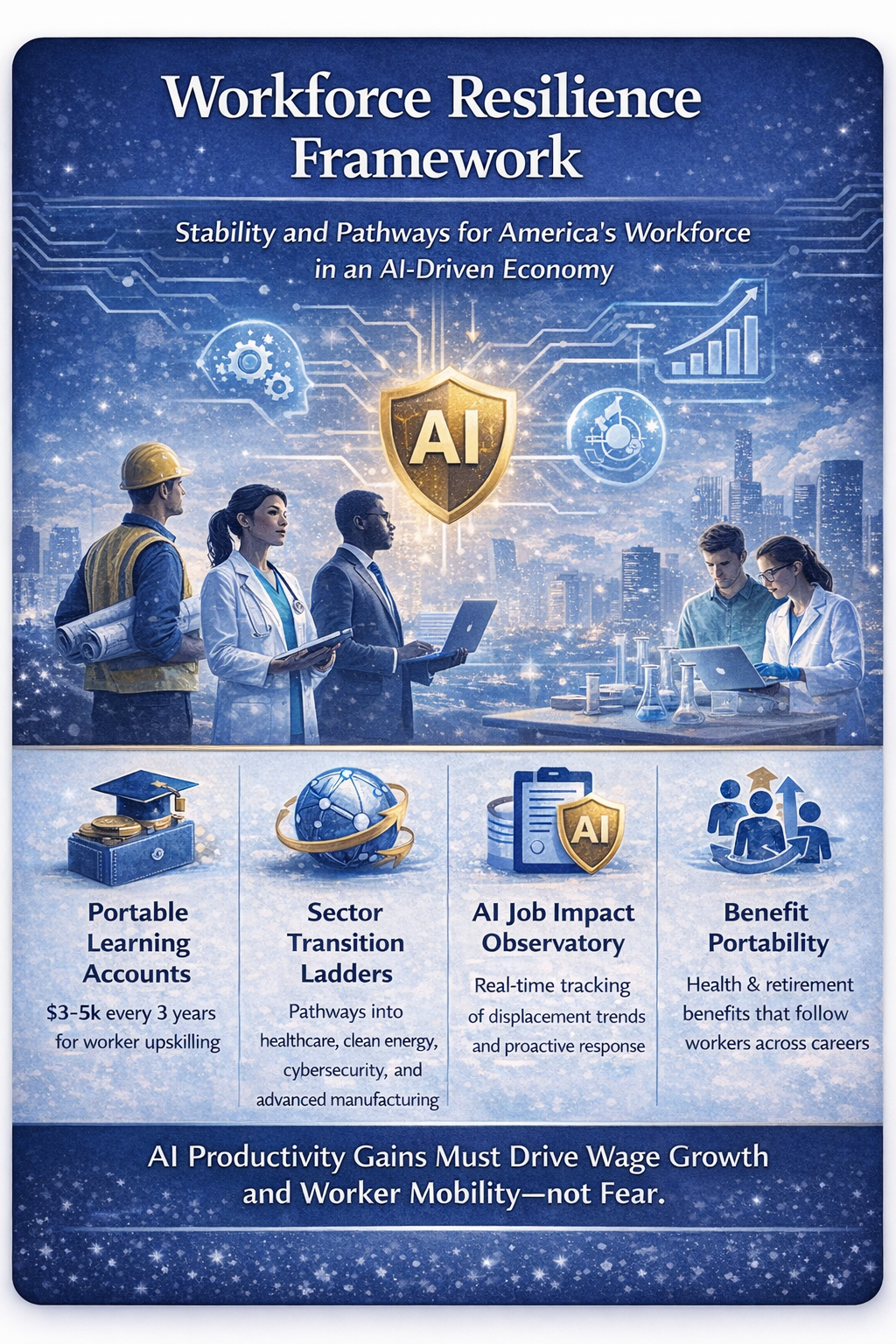
This framework ensures workers thrive regardless of corporate behavior.
Structural Commitments
Portable learning accounts ($3–5k every 3 years)
National AI Job Impact Observatory
Sectoral transition ladders
Benefit portability
Result
AI productivity gains translate into:
Wage growth
Mobility
Reduced fear of innovation

-
Public-Good Deployment
Focus Areas
Healthcare access
Climate resilience
Public-sector efficiency
Equity and inclusion
AI here is explicitly mission-bound to outcomes—not profit alone.
-
Fiscal Anchor
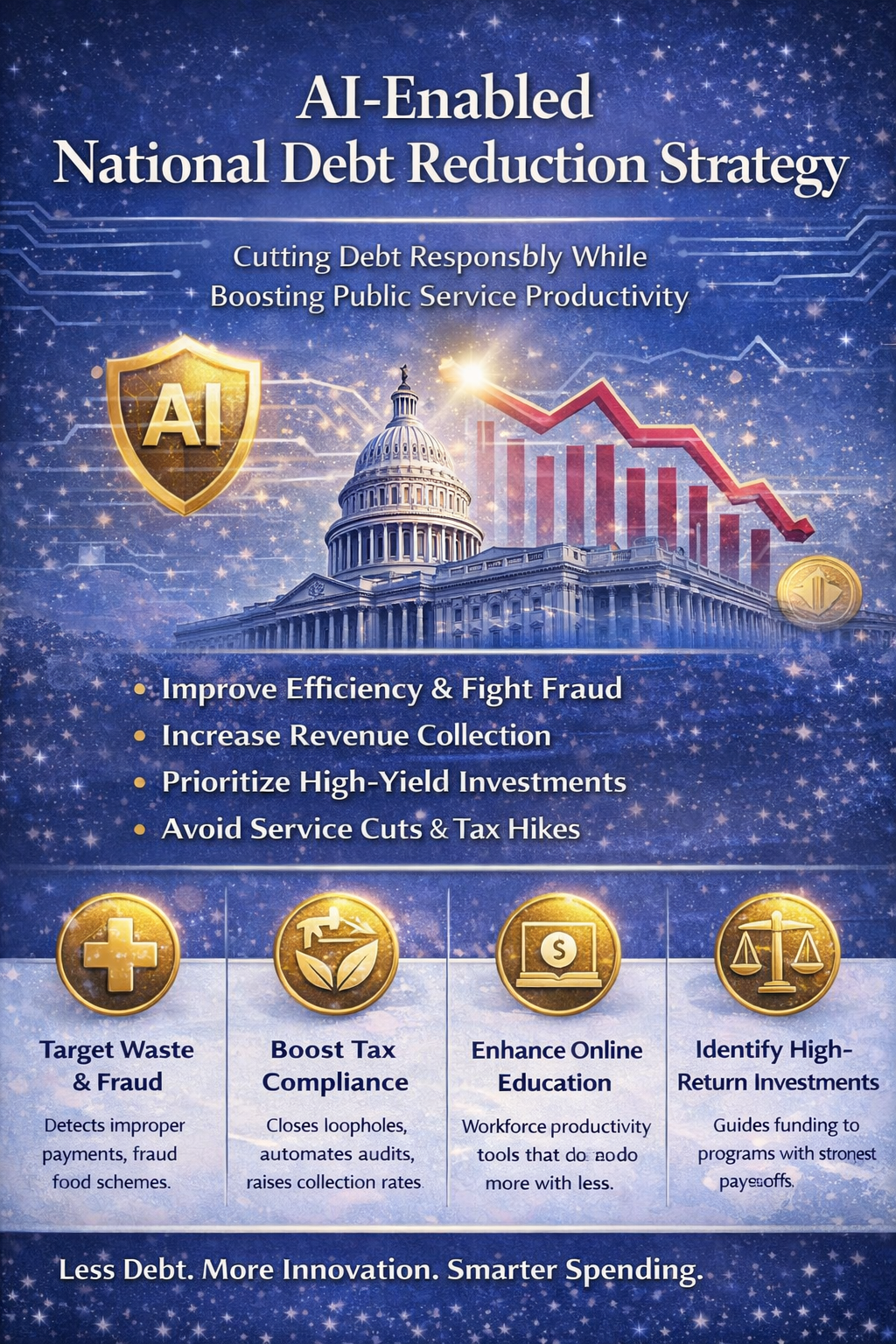
How This Connects Everything
AI helps:
Eliminate waste and fraud
Improve tax compliance
Optimize procurement
Reduce healthcare admin costs
Power climate-linked revenue
Critical Safeguard
Debt reduction cannot come from austerity or workforce erosion—it must come from productivity recapture.
-
(Social Equity & Automation-Era Resilience Side)
A data-driven, inflation-aware blueprint to transform AI-era productivity gains into a permanent living-wage floor — $1,500 per adult and $500 per child (2025$) — indexed to cost of living by 2032. This plan ensures every American shares in the wealth created by automation through a funded, fiscally responsible “AI dividend” that protects dignity, demand, and democracy.
-
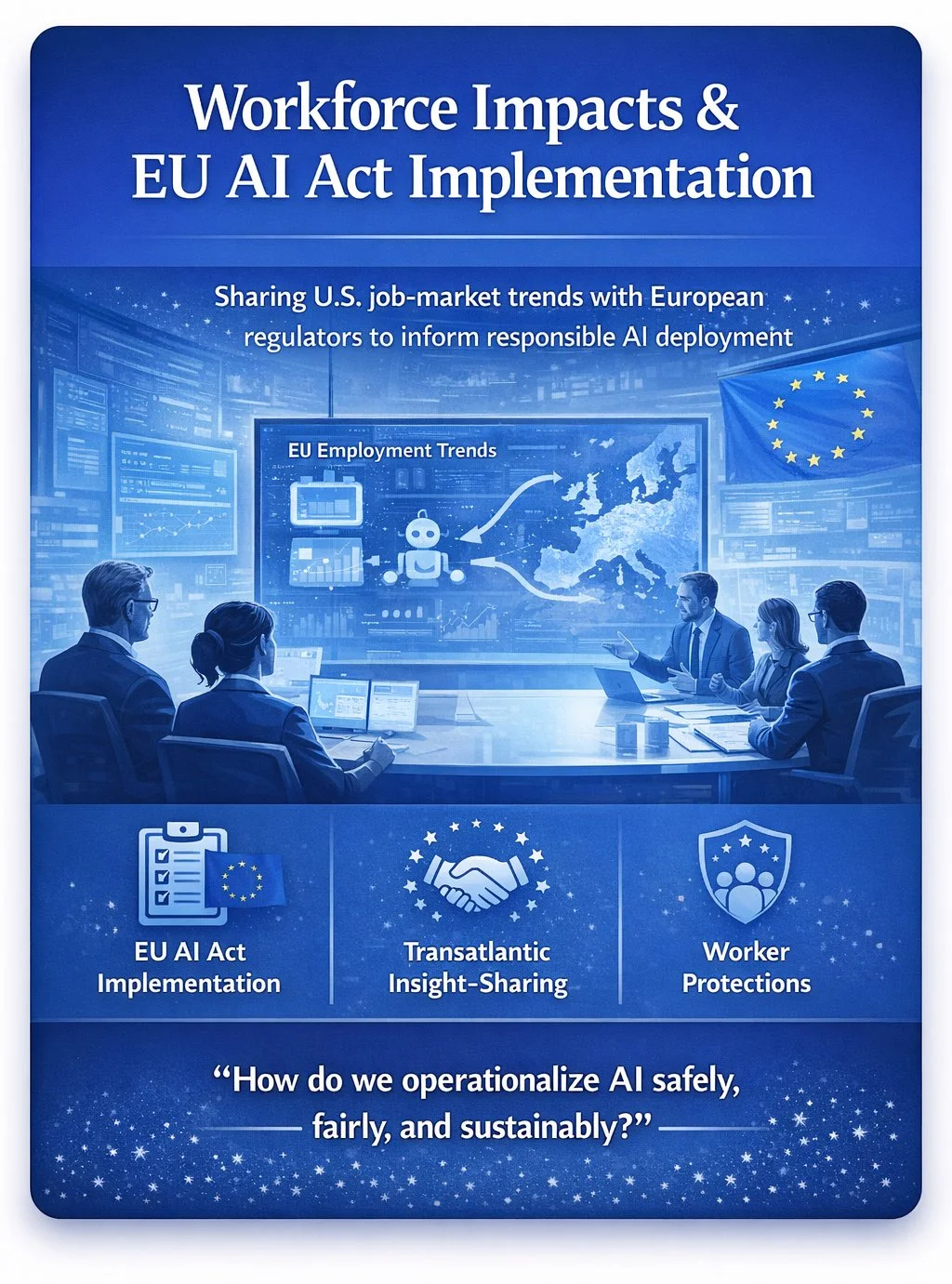
A concise, non-binding informational submission supporting human-centric AI Act implementation in Europe through workforce-impact considerations informed by observed U.S. labor-market trends.
-
(climate & sustainability side)
AI-driven strategies to cut emissions, predict extreme weather, optimize renewable energy, and implement climate-smart revenue policies like carbon pricing.
-
(international governance side)
A collaborative charter proposed to the French Élysée and international partners to establish shared ethical principles for AI, emphasizing equity, sustainability, and human rights.
-
(energy & innovation side)
An AI-enhanced blueprint to accelerate nuclear fusion breakthroughs through advanced plasma modeling, materials science, and adaptive safety systems—paving the way for limitless clean energy.